
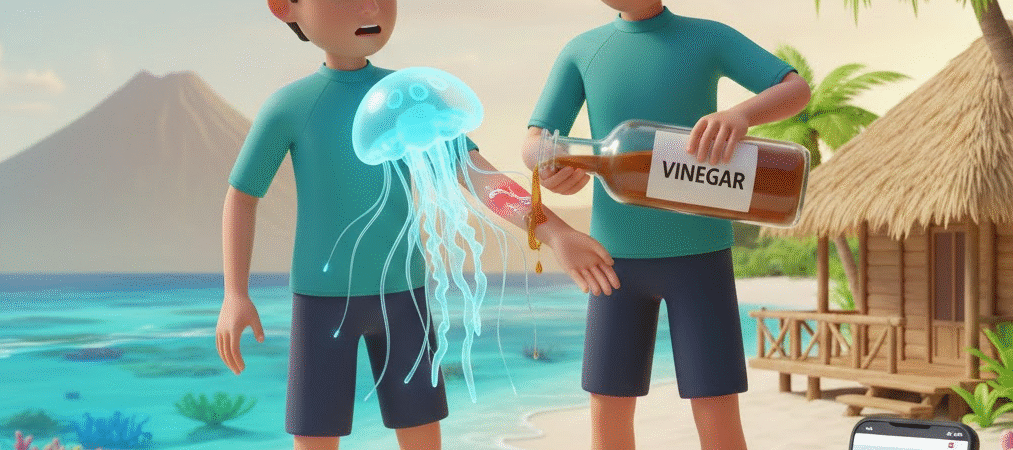
Gili Trawangan is well-known for its clear waters and rich marine life, offering an inviting environment for swimming, snorkeling, and diving. Although jellyfish encounters are not extremely common, they can occur, especially during certain tides or weather conditions. For anyone spending time in the sea around the island, understanding jellyfish stings in Gili trawangan and knowing how to respond is essential.
Why Jellyfish Stings Occur
Jellyfish drift with ocean currents and may be difficult to spot, especially when swimming near the surface. Their tentacles contain thousands of microscopic stinging cells called nematocysts, which can inject toxin when they come into contact with skin.
Even tentacles that detach from the jellyfish can still cause stings, making accidental contact possible even when no jellyfish are visibly nearby.
Environmental factors, including tides, seasonal changes, and water temperature, can influence jellyfish presence around Gili Trawangan.
Recognizing a Jellyfish Sting
Symptoms can vary depending on the type of jellyfish and individual sensitivity. Common signs include:
- Sudden burning or sharp pain
- Red, raised, or whip-like marks on the skin
- Swelling or localized irritation
- Tingling or itching
- Mild nausea or general discomfort
Most stings around Gili Trawangan are mild to moderate. However, immediate medical attention is advised if the person experiences difficulty breathing, persistent nausea, spreading symptoms, or if the sting affects a large area of the body.
Evidence-Based First Aid Steps
1. Leave the water
Moving out of the water reduces the risk of further stings and helps prevent panic-related accidents.
2. Rinse with seawater (not fresh water)
Seawater helps wash away tentacles without activating additional stinging cells.
Fresh water can worsen the sting by triggering more nematocysts to release toxin.
3. Remove tentacles carefully
Use a card, the edge of a shell, tweezers, or another flat object.
Avoid scraping harshly or rubbing the area.
4. Apply vinegar if available
Vinegar can help deactivate certain types of jellyfish stingers commonly found in tropical waters.
If vinegar is not available, continue rinsing with seawater.
5. Use heat therapy when possible
Immersing the affected area in warm water (40–45°C) for 20–30 minutes may help reduce pain.
Heat can help break down some jellyfish toxins.
6. Observe for worsening symptoms
If symptoms intensify, if a child is stung, or if the person has a history of allergies, medical evaluation is recommended.
Access to Medicine and Medical Help in Gili Trawangan
Gili Trawangan has several clinics and pharmacies that can assist with jellyfish stings. These facilities typically provide wound cleaning, pain management, antihistamines, topical creams, and further examination if symptoms require more attention.
One of the available options on the island is:
Island Medical Service – Medical Clinic & Pharmacy
Provides general medical care, basic treatment for stings, and access to medications such as pain relievers, antihistamines, and topical soothing creams.
Contact: +62 877-3891-1722 (WhatsApp and Call)
This clinic is included as one of the accessible healthcare points on the island. Visitors may choose any healthcare provider based on their needs.
Preventive Tips for Beachgoers
- Avoid touching unidentified objects floating in the water.
- Wear protective swimwear when snorkeling for extended periods.
- Pay attention to water conditions and local guidance from boat operators or diving instructors.
- Supervise children closely, as they may not recognize jellyfish tentacles in the water.
Conclusion
While jellyfish stings can happen in Gili Trawangan, they are generally manageable with proper first aid and awareness. Understanding the correct steps to take immediately after a sting and knowing where to seek medical help ensures a safer, more informed experience for visitors. Staying cautious and prepared allows everyone to continue enjoying the natural beauty of the island with confidence.