
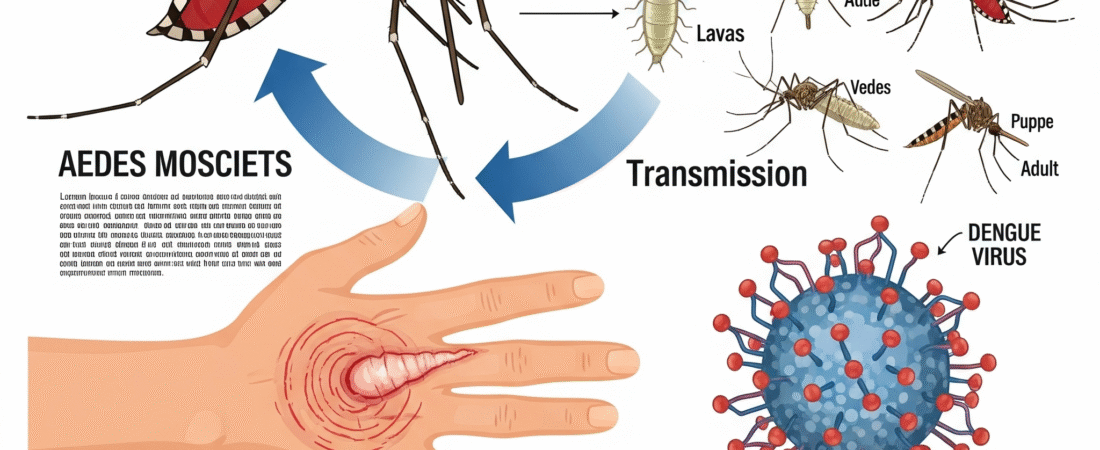
Dengue fever, also known simply as dengue, is a fast-spreading mosquito-borne disease that affects millions of people worldwide each year especially in tropical and subtropical countries. While many recover fully, severe cases can be life-threatening without proper care.
What Is Dengue Fever?
Dengue fever is caused by the dengue virus, which is transmitted primarily through the bite of an infected Aedes aegypti mosquito. These mosquitoes are most active during early morning and before sunset, and they often breed in stagnant water around homes such as buckets, flower pots, and open containers.
There are four types of dengue viruses (DENV-1 to DENV-4). A person can be infected more than once, and second or third infections can sometimes be more severe.
How Does It Spread?
Dengue does not spread directly from person to person. It spreads when a mosquito bites an infected person and then bites someone else, passing the virus along.
This is why controlling mosquito populations and avoiding mosquito bites are essential steps in preventing outbreaks.
Common Symptoms of Dengue Fever
Symptoms usually appear 4 to 10 days after being bitten by an infected mosquito. Common signs include:
- High fever (sudden and intense)
- Severe headache (especially behind the eyes)
- Joint and muscle pain (sometimes called “breakbone fever”)
- Nausea and vomiting
- Skin rash (appears a few days after the fever starts)
- Fatigue and weakness
Most dengue cases are mild to moderate and recover within a week. However, in some people, the disease can progress into a more dangerous form known as severe dengue or dengue hemorrhagic fever, which may cause:
- Bleeding (nose, gums, or under the skin)
- Drop in blood pressure (shock)
- Organ damage
- Severe dengue can be life-threatening and requires immediate medical attention.
Who Is at Risk?
Dengue can affect anyone, but certain groups are at higher risk of complications:
- People living in or traveling to tropical regions
- Individuals who have been infected before
- Young children and the elderly
- People with weakened immune systems
Why Awareness Matters
Early recognition and proper monitoring can save lives. There is no specific cure for dengue, but supportive treatment like staying hydrated and managing fever can significantly reduce the risk of complications. In severe cases, hospitalization may be necessary.
Prevention Is Key
Because there’s no universal cure for dengue, prevention is the best defense. Here are simple but effective ways to reduce the risk:
- Remove standing water where mosquitoes breed
- Use mosquito repellent, especially during early morning and late afternoon
- Wear long-sleeved clothing and use mosquito nets
- Install window screens in your home
- Support community efforts to control mosquito populations
Protect yourself from dengue, prevention is always better than treatment.